チャン・ベイチ・トップ Complete Guide
What is チャン・ベイチ・トップ?
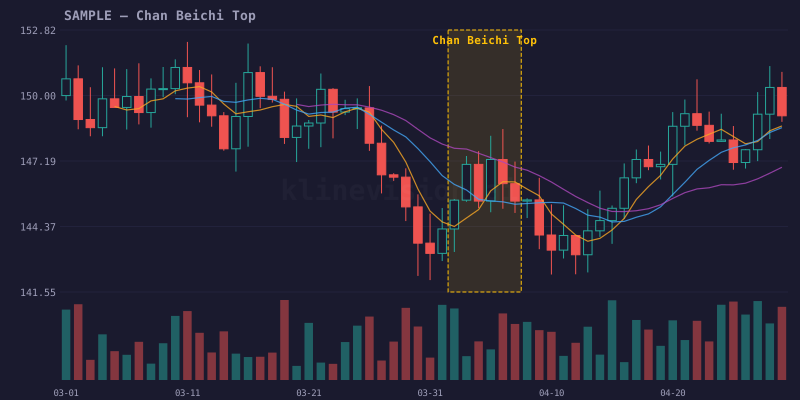
チャン・ビーイチ・トップは、弱気バイアスを持つ反転パターンです。形成には少なくとも20本のバーが必要です。このパターンはテクニカル分析で広く認識されており、すべての市場と時間軸で見られます。
Identification Rules
- The pattern must be preceded by a distinct and sustained uptrend to be considered a reversal.
- The 'Left Tower' must consist of one or more long-bodied bullish candles showing strong momentum.
- A consolidation phase of 5 to 15 bars must form a 'roof' of small-bodied candles at the peak.
- The 'Right Tower' must be a sharp bearish move with long-bodied candles closing deep into the previous advance.
References
- Thomas N. Bulkowski (2005). Encyclopedia of Chart Patterns.
- Steve Nison (2001). Japanese Candlestick Charting Techniques.
FAQ
What is the historical failure rate of this pattern?
According to Bulkowski, the Tower Top has an 11% break-even failure rate in bull markets, meaning it reaches its price target 89% of the time.
出来高は、フォーメーション形成中にどのように推移しますか?
Volume typically follows a U-shape: high on the initial rise, low during the flat top, and high on the bearish breakout.
What is the typical price target after a breakout?
The average decline is 16%. Traders often measure the height of the tower and project it downward from the breakout point.
How does it differ from a Rounding Top?
タワー・トップは両側に明確で急峻な垂直の「ピラー(柱)」を持つ一方、ラウンディング・トップはより緩やかで、爆発的な始まりと終わりを欠きます。
このパターンを特定するのに最適な時間軸はどれですか?
20本のバーという要件は、分布がより意味を持つ日足または週足チャートにおいて最も信頼性が高くなります。
More Analysis
Parts of this page (FAQ, introductions) are AI-assisted. Core data and statistics are algorithmically computed. All pattern definitions are human-reviewed.
免責事項:本ページは公開市場データとアルゴリズムによるテクニカル分析に基づいています。投資助言を構成するものではありません。
Data source: EODHD · © 2026 KlineVision AI