Chan Bi Down Complete Guide
What is Chan Bi Down?
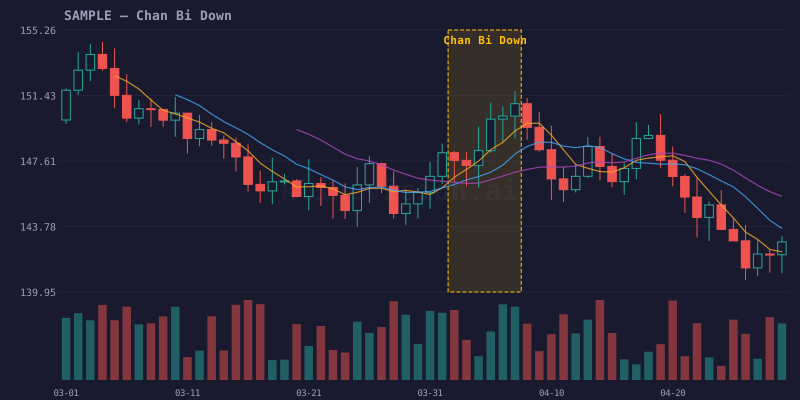
The Chan Bi Down, technically recognized in Western technical analysis as the Bearish Breakaway, is a sophisticated five-bar bearish reversal pattern that typically appears at the climax of an uptrend. The pattern begins with a tall white (green) candle, followed by a second candle that gaps higher. The third and fourth candles are relatively small, continuing the upward trajectory but showing signs of diminishing momentum through smaller bodies or higher shadows. The final, fifth bar is a decisive long black (red) candle that plunges downward, closing within the gap created between the first and second days. This structure illustrates a 'wrapping' effect where the initial bullish enthusiasm is trapped and then overwhelmed by sudden selling pressure. According to Thomas Bulkowski’s 'Encyclopedia of Chart Patterns,' the Bearish Breakaway functions as a bearish reversal 63% of the time in bull markets. Steve Nison, who introduced Japanese candlesticks to the West, notes that the pattern's significance is heightened if the fifth day's volume is substantially higher than the preceding three days, indicating a mass exit of long positions. Historically, the pattern is considered rare but reliable, ranking 48th in overall performance among candlestick patterns. It signals that the 'overbought' condition has reached a breaking point, and the trend is likely to shift from bullish to bearish or enter a significant corrective phase. Traders often look for the fifth candle to close at least halfway into the first candle's real body to confirm the strength of the reversal.
Identification Rules
- The market must be in a clear, established uptrend prior to the pattern.
- Day 1 is a long white (green) candle; Day 2 is a candle that gaps up from Day 1.
- Days 3 and 4 must be small-bodied candles that continue to make higher highs.
- Day 5 is a long black (red) candle that closes inside the gap between Day 1 and Day 2.
References
- Thomas N. Bulkowski (2005). Encyclopedia of Chart Patterns.
- Steve Nison (2001). Japanese Candlestick Charting Techniques.
FAQ
How reliable is the Chan Bi Down pattern?
According to Bulkowski's data, it has a 63% reversal rate in bull markets, making it a high-probability reversal signal despite its rarity.
What does the volume tell us about this pattern?
A spike in volume on the fifth day (the long red candle) significantly increases the pattern's reliability as it confirms aggressive selling.
Where should a stop-loss be placed?
The stop-loss is typically placed just above the highest high of the five-day sequence, usually the high of Day 3 or Day 4.
How does it differ from the Falling Three Methods?
Falling Three Methods is a bearish continuation pattern occurring in a downtrend, while Chan Bi Down is a reversal pattern occurring at a peak.
What is the frequency rank of this pattern?
It is ranked 77th in frequency out of 103 patterns, meaning it does not appear often in daily charts.
More Analysis
Parts of this page (FAQ, introductions) are AI-assisted. Core data and statistics are algorithmically computed. All pattern definitions are human-reviewed.
Disclaimer: This page is based on publicly available market data and algorithmically generated technical analysis. It does not constitute investment advice. Historical pattern statistics do not guarantee future performance. Invest at your own risk.
Data source: EODHD · © 2026 KlineVision AI