Dark Cloud Cover Complete Guide
What is Dark Cloud Cover?
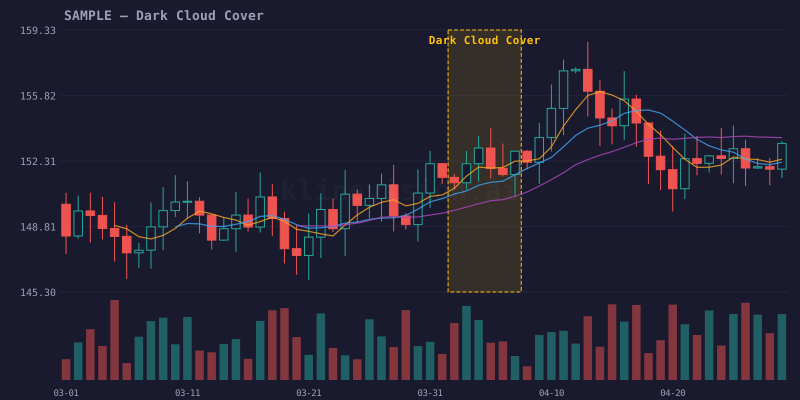
The Dark Cloud Cover is a two-candlestick bearish reversal pattern that typically appears at the top of an uptrend. It signals a potential shift from bullish to bearish sentiment. The pattern begins with a strong, long white (or green) candlestick, indicating robust buying pressure and a continuation of the existing uptrend. The second day opens with a gap up, often above the high of the first candle, initially suggesting further bullish momentum. However, this optimism quickly fades as sellers take control, pushing the price down significantly throughout the day. The second candlestick is a long black (or red) candle that closes well into the body of the first white candle, ideally penetrating at least 50% of its real body. This deep penetration signifies that the bears have not only erased the day's gains but have also started to undo the previous day's bullish progress, indicating a strong rejection of higher prices. Volume characteristics can enhance the pattern's reliability; a higher volume on the second, bearish day compared to the first day suggests stronger conviction behind the selling pressure. Steve Nison, a pioneer in introducing candlesticks to the West, highlights the pattern's significance as a bearish reversal. Thomas Bulkowski's research in 'Encyclopedia of Chart Patterns' (3rd Edition) supports its effectiveness, ranking it highly for performance among reversal patterns (e.g., 4 out of 103) with a low break-even failure rate (around 6%). He notes an average decline of 6% after a downward breakout and that the pattern tends to perform best in bear markets. The failure of the market to sustain the initial gap up and the subsequent deep close into the prior bullish candle are key psychological elements signaling a potential top.
Identification Rules
- An existing uptrend must be present before the pattern forms.
- The first candlestick is a long white (or green) bullish candle, indicating strong buying pressure.
- The second candlestick is a long black (or red) bearish candle that opens above the high of the first candle (a gap up).
- The second candlestick closes well into the body of the first candle, ideally penetrating at least 50% of the first candle's real body.
References
- Thomas N. Bulkowski (2005). Encyclopedia of Chart Patterns.
- Steve Nison (2001). Japanese Candlestick Charting Techniques.
FAQ
What is the minimum penetration required for the second candle into the first?
While any penetration into the first candle's body is a warning, Steve Nison emphasizes that the second candle's close should be *well into* the first candle's body, ideally at least 50%. Deeper penetration signifies a stronger reversal signal, indicating a more decisive shift in sentiment.
How important is volume for the Dark Cloud Cover pattern?
While not strictly mandatory for pattern recognition, higher volume on the second (bearish) day, especially compared to the first day, adds significant confirmation to the pattern's bearish implications. It suggests strong selling pressure overcoming previous buying enthusiasm, making the reversal more reliable.
What is the difference between Dark Cloud Cover and Bearish Engulfing?
Both are bearish reversal patterns. The key difference lies in the second candle's close. In Dark Cloud Cover, the second bearish candle closes *within* the body of the first bullish candle (at least 50% penetration). In a Bearish Engulfing pattern, the second bearish candle's body completely *engulfs* (covers) the entire body of the first bullish candle, closing below its low, indicating an even stronger bearish takeover.
What is the historical reliability of the Dark Cloud Cover pattern?
According to Thomas Bulkowski's 'Encyclopedia of Chart Patterns' (3rd Edition), the Dark Cloud Cover pattern has a strong historical reliability as a bearish reversal. He ranks it highly for performance (e.g., 4 out of 103 for reversal patterns) and notes a low break-even failure rate (around 6%). Its effectiveness can vary with market conditions, often performing better in bear markets, with an average decline of 6% after a downward breakout.
Should I trade solely based on a Dark Cloud Cover pattern?
No. Like all candlestick patterns, Dark Cloud Cover is best used in conjunction with other technical analysis tools and indicators. Confirming the signal with trendlines, support/resistance levels, moving averages, or oscillators (e.g., RSI, MACD) can significantly improve trade success rates. It provides a strong warning, but confirmation from multiple sources is key for robust trading decisions.
More Analysis
Parts of this page (FAQ, introductions) are AI-assisted. Core data and statistics are algorithmically computed. All pattern definitions are human-reviewed.
Disclaimer: This page is based on publicly available market data and algorithmically generated technical analysis. It does not constitute investment advice. Historical pattern statistics do not guarantee future performance. Invest at your own risk.
Data source: EODHD · © 2026 KlineVision AI